Speaking Engagements UPCOMING
Predict and Prepare sponsored by Workday 12/16
PAST BUT AVAILABLE FOR REPLAY
The Bill Kutik Radio Show® #171, 2/15
The Bill Kutik Radio Show® #160, 8/14
The Bill Kutik Radio Show® #145, 1/14
Workday Predict and Prepare Webinar, 12/10/2013
The Bill Kutik Radio Show® #134, 8/13
CXOTalk: Naomi Bloom, Nenshad Bardoliwalla, and Michael Krigsman, 3/15/2013
Drive Thru HR, 12/17/12
The Bill Kutik Radio Show® #110, 8/12
Webinar Sponsored by Workday: "Follow the Yellow Brick Road to Business Value," 5/3/12 Audio/Whitepaper
Webinar Sponsored by Workday: "Predict and Prepare," 12/7/11
HR Happy Hour - Episode 118 - 'Work and the Future of Work', 9/23/11
The Bill Kutik Radio Show® #87, 9/11
Keynote, Connections Ultimate Partner Forum, 3/9-12/11
"Convergence in Bloom" Webcast and accompanying white paper, sponsored by ADP, 9/21/10
The Bill Kutik Radio Show® #63, 9/10
Keynote for Workforce Management's first ever virtual HR technology conference, 6/8/10
Knowledge Infusion Webinar, 6/3/10
Webinar Sponsored by Workday: "Predict and Prepare," 12/8/09
Webinar Sponsored by Workday: "Preparing to Lead the Recovery," 11/19/09 Audio/Powerpoint
"Enterprise unplugged: Riffing on failure and performance," a Michael Krigsman podcast 11/9/09
The Bill Kutik Radio Show® #39, 10/09
Workday SOR Webinar, 8/25/09
The Bill Kutik Radio Show® #15, 10/08
PAST BUT NO REPLAY AVAILABLE
Keynote, HR Tech Europe, Amsterdam, 10/25-26/12
Master Panel, HR Technology, Chicago, 10/9/012
Keynote, Workforce Magazine HR Tech Week, 6/6/12
Webcast Sponsored by Workday: "Building a Solid Business Case for HR Technology Change," 5/31/12
Keynote, Saba Global Summit, Miami, 3/19-22/12
Workday Rising, Las Vegas, 10/24-27/11
HR Technology, Las Vegas 10/3-5/11
HR Florida, Orlando 8/29-31/11
Boussias Communications HR Effectiveness Forum, Athens, Greece 6/16-17/11
HR Demo Show, Las Vegas 5/24-26/11
Workday Rising, 10/11/10
HRO Summit, 10/22/09
HR Technology, Keynote and Panel, 10/2/09
Adventures of Bloom & Wallace
|
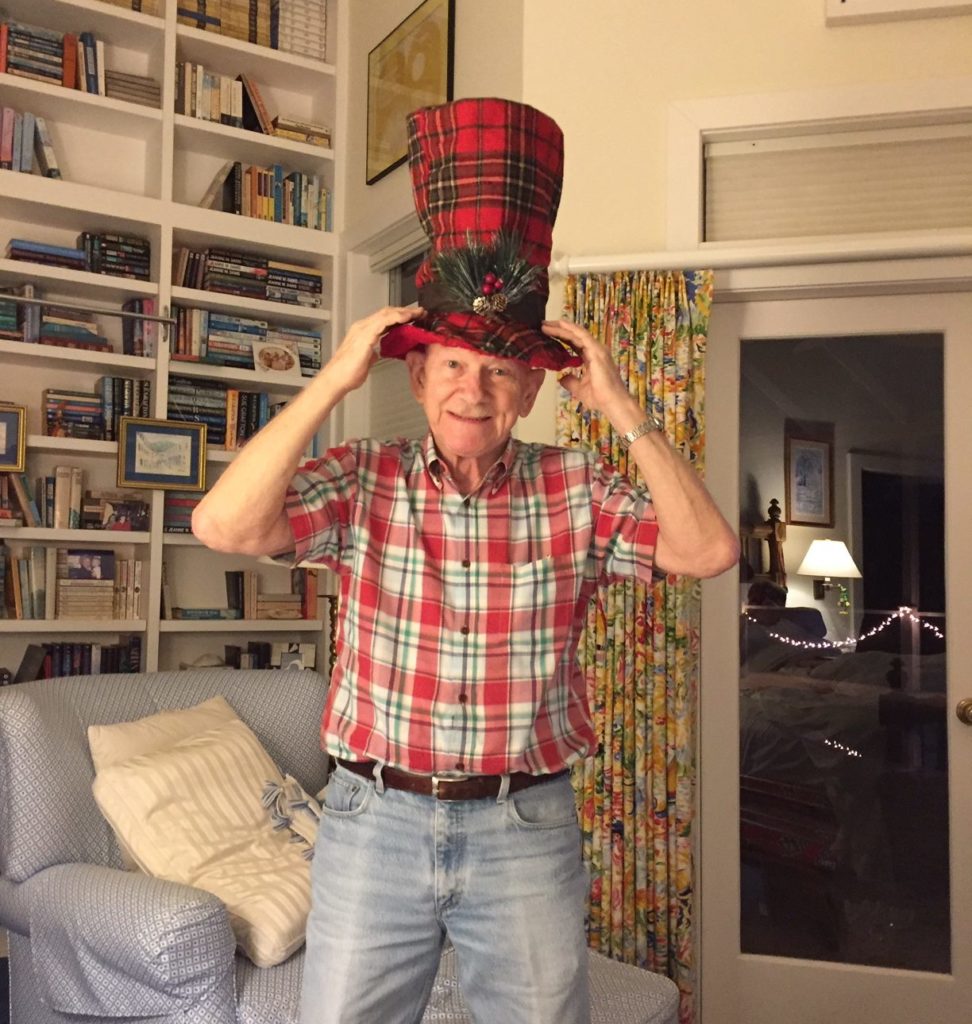 Introduction Introduction
Some of you may know that I wrote this widely read blog from November 2009 until my last post in August 2019. It wasn’t retirement that stopped me from blogging but rather the need to focus 200% on getting Ron through his second bout with cancer.
While I was blogging regularly, about 80% of my many hundreds of posts were intended for the enterprise HR technology community and of no particular interest to all the “normal” people in our lives. But some of those posts took readers along with me and Ron Wallace, my beloved husband and now of blessed memory, as we went on tour, introduced them to my family and childhood, provided personal growth guidance, and shared some life lessons as I became many years than many decades older than the young professionals to whom I was increasingly an elder stateswoman.
I struggled to keep writing once we began Ron’s 2nd cancer battle in November 2018; I posted for the last time when we learned in mid-August 2019 just how challenging Ron’s cancer journey had become. Since Ron’s passing last summer, the only real solace I’ve found is in the memories and relationships that Ron and I had nurtured, especially during our half century together. I hope you will read the entire post below and vow to invest more in making your own memories and nurturing your relationships because I know now how much you’re going to need them.
I don’t know yet what the future of my blog will be or won’t, but I do know that my life without Ron will still be directed at making more memories and continuing to nurture the relationships I cherish. After six months of picking up the pieces, drawing deeply upon the reservoir of wonderful memories we built together, I now know that I can keep my promise to Ron that I would be okay, that I would continue to live a life that’s worthy of the privilege.
Making Memories — A Life Well-Lived
My father passed away in 1995 just before my 50th birthday, and we buried him on my birthday. At his funeral, there was quite a crowd, not because of his prominence but because of all he had done for others in the community where he had lived all his life. Not a man of any wealth, my father had given generously of his time and talents to a range of organizations and individuals, and it was wonderful to hear their stories of how my very humble father had made such an important difference in their lives. In particular I was struck by the folks, mostly strangers to me, who told me about my Dad’s having taken one of their parents under his wing, going with them to doctors’ appointments, helping them with their bookkeeping, or just taking them out to lunch. Dad had lived the values of our Jewish faith, of tzedakah and tikkun olam, and in doing so he had earned the warm send-off that he got.
My older sister (there are just the two of us) had also lived her entire life (and still does) in that same or the neighboring community, except when her husband was in law school in DC. She was surrounded by hordes of people she’d known all her life, many of whom knew each other. They were connected by having gone to the same schools, raised children in the same neighborhoods, attended the same synagogues, shopped at the same markets, connected through work, and the list goes on of ways in which hometown folks are connected directly or through a mutual friend. I saw how their presence comforted and sustained my sister, and how their shared experiences, recounted for the umpteenth time, renewed their bonds of friendship. I envied my sister the warmth of community, the comfort of familiarity, and the strength that deep roots can provide. gBut I had chosen a very different lifestyle and, in that song made famous by Edith Piaf, je ne regrette rien.
My life had been lived in many places, and my friends were scattered far and wide. I was so grateful that several of them had traveled a considerable distance far to be with me on that dreadful day, but I was also struck by the fact that friends from the different parts of my life had never met each other, or met any of my family. Long after we buried my Dad, that thought remained. I didn’t want my global community of friends and family (including all of Ron’s family, who are centered in the Pacific Northwest) to meet for the first time at my own funeral.
And that’s where the idea originated for my 55th birthday party weekend. What if we threw a three day party, invited friends and family from all over, entertained them with everything from steel band to mariachis, fed them everything from traditional Jewish soul food to tropical specialties, and made damn sure that everyone got to meet everyone else at a celebration, not of my life but of our collective lives? What if we planned far enough ahead so that folks could weave a trip to Fort Myers, Florida into their own travel dreams and save up to make the trip possible? And what if we helped those who couldn’t otherwise join us? With the help of an amazing party planner, and now one of my closest local friends, we pulled off a party weekend to remember. Not only was it worth every penny, but we’re all still talking about it. Those memories have gone platinum.
It’s been nearly twenty years since that amazing weekend, and we’ve lost quite a few of the friends who shared it with us, including my beloved husband last summer. Looking through the pictures of that weekend recently, I was struck by how many of our friends we had lost and how many are battling right now for the chance to create more memories. In those nearly twenty years, my career was amazing, and it was really wonderful to watch, helping where I could, a new generation or two of colleagues as well as of HR software. In those nearly twenty years, Ron and I traveled a great deal to places around the globe where we already had friends as well as to places we couldn’t even pronounce and where we knew no one, thus building many more memories. We sailed the Caribbean, sold our own Caliber 40′ sloop and replaced it with an American Tug 34′ trawler, cruised most of the European rivers as well as several seas and oceans, trekked to Machu Pichu and camped luxuriously at Uluru, and we made many new friends along the way. From Agatha Christie Festivals in Devon to Ngaio Marsh’s home in Christchurch, we kept on the move, making really wonderful memories, until my longstanding body design flaws caught up with me. We immersed ourselves in the live theater that we loved, wandered through museums and gardens, and enjoyed as much as possible of what our amazing planet offers. I began stepping back from my career when my legs just couldn’t carry me at the pace my work required, but Ron and I were able to modify our personal travel style and pacing to accommodate my increasingly wonky and painful legs. And all that time, from long before my 55th until last summer, we were amassing wonderful memories without ever realizing that they were investments which would pay huge dividends.
When Ron was diagnosed with his 2nd cancer in November, 2018, we thought it would be like his 1st cancer, from which he’d been in remission for more than a decade. It was another well-known, quite common cancer, with another well-known and very successful chemo treatment protocol, an entirely workable treatment schedule done at our excellent local cancer center, and an excellent prognosis. Inconvenient to be sure, but nothing to cause any real alarm. So we cancelled a planned small ship cruise up the Amazon, and flung ourselves into his cancer treatment, managing the inevitable side effects, keeping away from crowds and obvious sources of potential infections, and counting off the treatment days. As before, Ron handled even this much stronger chemo regimen with his usual aplomb, and he coped reasonably well with the side effects. He even made light of his chemo-baldness by wearing a red court jester cap, complete with bells, along with his tuxedo to a major fundraising ball. We really never considered that Ron wouldn’t beat this until that reality couldn’t be avoided.
At first, it looked like the treatment had been a winner, and then it didn’t. I won’t bore you with the details, but what looked like a temporary inconvenience and a short hold on our travel dreams morphed, along with his cancer cells, into the need for a much more complex treatment protocol, lots more cancelled travel, and considerable uncertainty about when (or later, if) we’d be able to hit the road again and how far Ron’s expected immune system damage would permit us to go. We had been damn lucky in our lives, and we’d hoped for more of the same. Ron had access to the best doctors and the latest treatments, and we had great insurance coverage to pay those ginormous medical bills. When all of these advantages were added to Ron’s otherwise good health and positive attitude, not to mention my research and project management abilities, we were confident that we had the best possible shot at a successful outcome.
When we learned mid-January, 2020, just as the pandemic was coming into focus, that the leading edge CAR-T therapy, for which we’d been residents in Tampa for six weeks while Ron was treated at Moffitt Cancer Center, had failed him, I knew that our time together was coming to an end far sooner than we had ever imagined. Although I shared the relevant information with Ron, his optimism for that positive outcome never faltered even as I was using all of my energy to care for him and keep my fears to myself. Those last few weeks in May and June were awful, especially since the pandemic made it impossible for family and friends to be with and support me or to say their goodbyes. At the end, Ron passed away peacefully, without pain (or the need for any pain meds, so with a completely clear mind), without fear, and just after I had given him my confident answer to the only question which weighed on his mind, my promise that I would be okay. Neither Ron nor I had firm beliefs about what happens after death, but I’m confident that if there are pearly gates, he lived his life in such a way as to have aced the entrance exam.
Our Memories And Relationships Sustain Me
Between the pandemic and losing Ron, not to mention my own health issues and the inevitable impact of aging, I have no idea when or if I can carry on with our yet to be fulfilled travel dreams, including travel canceled when Ron became ill (e.g. the Amazon’s orchids, Africa’s Great Migration, Papua New Guinea for the annual Sing Sing, India’s Royal Triangle, the Suez Canal and Egypt’s incredible ruins) plus plans in process for revisiting all of our favorite places Down Under, across Europe, and in South America. I also don’t know when or if I’ll be able to make one more visit with cherished friends and family around the world before age and my wonky legs make many of those trips unachievable. But as I’ve connected with those same friends and family around the world since Ron’s death, our conversations have always turned to our shared memories, to the time spent together. Those connections and conversations have helped me cope with the overwhelming grief of losing Ron.
Building memories is so important because they sustain you during the tough times. And renewing relationships, by investing precious time in them, does the same. Ron and I were so grateful for all that we were able to do before my legs got wonky and then during his ten years of remission from his first cancer. We’re especially grateful for the friends/family with whom we spent time, even when time was tight. Now, when my life is filled with so much uncertainty and I’m preparing for the challenges ahead, I can’t tell you how many times I’ve found real joy in remembering the wonderful places, people, and experiences with which we’ve been blessed to fill our lives. I’ve even used some of those experiences, e.g. sailing into Saltwhistle Bay on Mayreau, dropping anchor, and swimming ashore to the beach bar made entirely of grapefruit-sized, smooth as silk boulders of unknown origin, in one of the visualization techniques with which I help manage my chronic pain.
Just as we should all live healthy lives in order to give ourselves the best possible chance at a long and productive “twilight,” I believe that we should all live lives as large as possible, filled with as many experiences and healthy relationships as possible for the same reason. When the inevitable shrinking of our world happens with age or illness or whatever, we need to have big balances in our memories and friendship accounts upon which to draw. I promised Ron that I would be okay at a time when all I really could promise was that I would do my best. But with the joy of so many wonderful memories and the support of our wonderful family and friends, I know that not only will I be okay but also that I will continue to build memories and relationships for as long as I’m able to do so. And I urge you to do the same.
P.S. I haven’t decided yet whether or not I’ll continue writing for my blog, but if I do you can expect a LONG overdue remodeling and content updates. This is such a out-of-date look and feel.
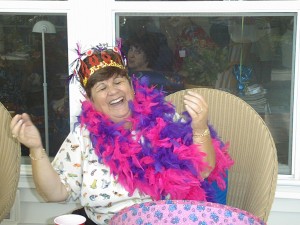 My 55th Birthday Celebration Weekend My father passed away in 1995 just before my 50th birthday, and we buried him on my birthday. At his funeral, there was quite a crowd, not because of his prominence but because of all he had done for others in the community where he’d lived all his life. Not a man of any wealth, he had given generously of his time and talents to a range of organizations and individuals, and it was wonderful to hear their stories of how my very humble father had made such an important difference in their lives. In particular I was struck by the folks, mostly strangers to me, who told me about my Dad’s having taken one of their parents under his wing, going with them to doctors’ appointments, helping them with their bookkeeping, or just taking them out to lunch. Dad had lived the values of our faith, of tzedakah, and in doing so he had earned the warm send-off that he got.
My older sister (there are just the two of us) had also lived her entire life (and still does) in that same or the neighboring community, except when her husband was in law school in DC. She was surrounded by hordes of people she’d known all her life, many of whom knew each other. They were connected by having gone to the same schools, raised children in the same neighborhoods, attended the same synagogues, shopped at the same markets, connected through work, and the list goes on of ways in which hometown folks are connected directly or through a mutual friend. I saw how their presence comforted and sustained my sister, and how their shared experiences, recounted for the umpteenth time, renewed their bonds of friendship. I envied my sister the warmth of community, the comfort of familiarity, and the strength that deep roots can provide. But I had chosen a very different lifestyle and, in that song made famous by Edith Piaf, je ne regrette rien.
My life had been lived in many places, and my friends were scattered far and wide. I was so grateful that several of them had traveled far to be with me on that dreadful day, but I was also struck by the fact that friends from the different parts of my life had never met each other, or met any of my family. Long after we buried my Dad, that thought remained. I didn’t want my global community of friends and family (all of Ron’s family are in the Pacific Northwest) to meet for the first time at my own funeral. And that’s where the idea originated for my 55th birthday party weekend. What if we threw a three day party, invited friends and family from all over, entertained them with everything from steel band to mariachis, fed them everything from traditional Jewish soul food to tropical specialties, and made damn sure that everyone got to meet everyone else at a celebration, not of my life but of our lives? What if we planned far enough ahead so that folks could weave a trip to Fort Myers, Florida into their own travel dreams and save up to make the trip possible? And what if we helped some who couldn’t otherwise join us? With the help of an amazing party planner, and now one of my closest local friends, we pulled off a party weekend to remember. Not only was it worth every penny, but we’re all still talking about it. Those memories have gone platinum.
It’s been nearly twenty years since that amazing weekend, and we’ve lost quite a few of the friends who shared it with us. Looking through the pictures recently, I was struck by how many of our friends we had lost and how many are battling right now for the chance to create more memories. In those nearly twenty years, my career was amazing, and it was really wonderful to watch, helping where I could, a new generation or two of colleagues as well as of HR software. In those nearly twenty years, we traveled a great deal to places around the globe where we already had friends as well as to places we couldn’t even pronounce and where we knew no one. We sailed the Caribbean, sold our own Caliber 40′ sloop and replaced it with an American Tug 34′ trawler, cruised most of the European rivers as well as some several seas and oceans, trekked to Machu Pichu and camped luxuriously at Uluru, and we made many new friends along the way. From Agatha Christie Festivals in Devon to Ngaio Marsh’s home in Christchurch, we kept on the move, making really wonderful memories, until longstanding body design flaws caught up with me. I finally retired when my legs just couldn’t carry me at the pace my work required, but we were able to modify our personal travel style and pacing to accommodate my increasingly wonky legs. And all that time, from long before my 55th until last fall, we were amassing wonderful memories without ever realizing that they were investments which would pay huge dividends.
When Ron was diagnosed with his 2nd cancer last November, we thought it would be like his 1st cancer, from which he’d been in remission for more than a decade. Another well-known, quite common cancer, another well-known and very successful chemo treatment protocol, an entirely workable treatment schedule done at our excellent local cancer center, and an excellent prognosis. Inconvenient to be sure, but nothing to cause any real alarm. So we cancelled a planned small ship cruise up the Amazon, and flung ourselves into cancer treatment, managing the inevitable side effects, keeping away from crowds and obvious sources of potential illnesses, and counting off the treatment days. As before, Ron handled even this much stronger chemo with his usual aplomb and had minimal side effects. He even made light of his chemo-baldness by wearing a red court jester cap, complete with bells, along with his tuxedo to a major fundraising ball. But then the music stopped. At first, it looked like the treatment had been a winner, and then it didn’t. I won’t bore you with the details, but what looked like a temporary inconvenience and a short hold on our travel dreams morphed, along with his cancer cells, into the need for a much more complex treatment protocol, lots more cancelled travel, and considerable uncertainty about when we’ll be able to hit the road again and how far immune system issues may permit us to go.
And that brings me to the power of memories. We’ve been damn lucky in our lives, and we’re hoping for more of the same. Best doctors, latest treatment, and great insurance coverage added to Ron’s otherwise good health and my project management abilities are the ingredients for a successful outcome. But it’s all going to take time, time during which we’ll need to stay off the road, stay away from crowds, and stay as healthy as possible. So our travel dreams list (the Amazon’s orchids, Africa’s Great Migration, Papua New Guinea for the annual Sing Sing, India’s Royal Triangle, and much more) as well as the chance for one more visit with cherished friends around the world before age and my wonky legs make many of those trips unachievable are now on hold. Our top priority is Ron’s health, and we’ll do whatever it takes to wring the best results out of the prescribed treatment. For anyone who’s curious, it’s called CAR T-cell therapy, and a good overview can be found here.
Building memories is so important because they sustain you during the tough times. And renewing relationships, by investing precious time in them, does the same. Ron and I are so grateful for all that we were able to do before my legs got wonky and then during his ten years of remission from his first cancer. We’re especially grateful for the friends/family with whom we spent time, even when time was tight. Now, when our lives are filled with uncertainties and we’re preparing for the challenges ahead, I can’t tell you how many times we’ve found real joy in remembering the wonderful places, people, and experiences with which we’ve been blessed to fill our lives. I’ve even used some of those experiences, e.g. sailing into Saltwhistle Bay on Mayreau, dropping anchor, and swimming ashore to the beach bar made entirely of grapefruit-sized, smooth as silk boulders of unknown origin, in one of the visualization techniques with which I help manage my chronic pain. Just as we should all live healthy lives in order to give ourselves the best possible chance at a long and productive “twilight,” I believe that we should all live lives as large as possible, filled with as many experiences and healthy relationships as possible. When the inevitable shrinking of our worlds happens with age or illness or whatever, we’ll have big balances in our memories and friendship accounts upon which to draw — and we all need them.
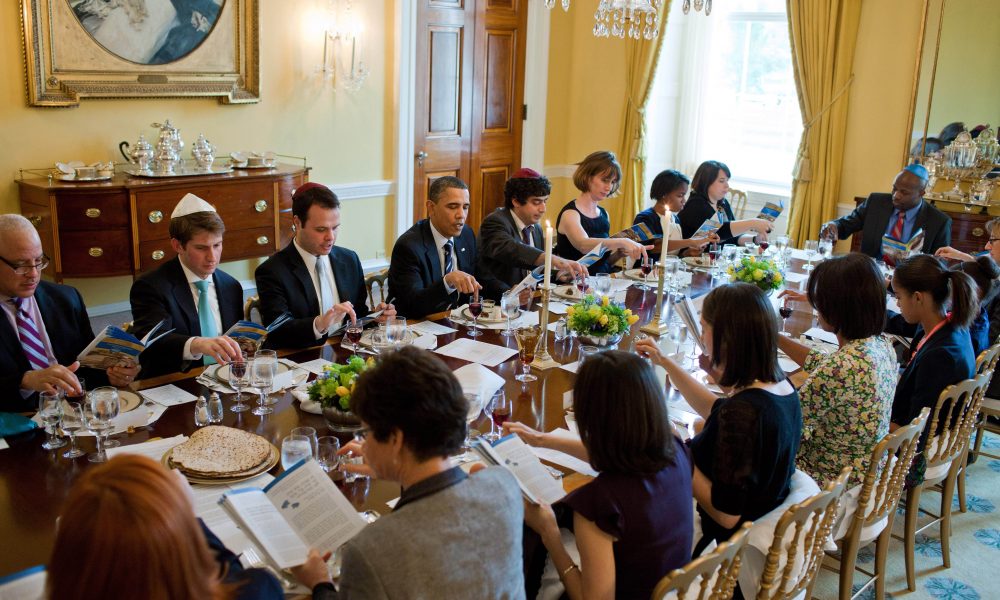 Passover Seder At The Obama White House I’ve been feeling a little weepy this Passover, awash in memories of the epic Seders of my orthodox Jewish childhood. They were epic, not just in the number of people participating, nor in the abundance of wonderful, traditional dishes, but especially in the learning, the discussion, the debating, and the inclusion in all of that of the always questioning child that I was.
It was in the Passover Haggadah, in the retelling of how we were freed from slavery in Egypt, that I learned about the foundations of Jewish commitment to social justice and caring for the strangers in our midst. We are commanded in the Passover service to view that original Exodus, not as a historical incident in which our ancestors were freed, but as something which was happening to every one of us. Somewhere we have pictures of those Seders, but this picture of the Obama family’s White House Seder, Haggadahs in hand, always makes me smile, so I’ve included it instead.
All of my Dad’s siblings, their spouses and children were there, for starters, plus there were other family and friends who came and went from the guest list as the Blooms ensured that no one in our extended family was ever without a Seder to attend. The adults gathered around the beautifully set dining room table (no where near as grand as the White House one in this picture) while my first cousins, my sister and I sat at an improvised and far less elegant “children’s table” through the open arch in the living room. One of the highlights of my young life was graduating from the children’s table to join the adults seated around the dining room table. But I’m getting ahead of my story.
The matriarch of our family, Bubbi Bloom of blessed memory, and her husband Meyer Bloom, the grandfather I never knew because he had died before I was born, fled the Czar’s pogroms and forced conscription at the start of the 20th century. Along with many others from their shtetl near Vilnius, in what is now Lithuania but was then the Russian Pale, their destination was America, Der Goldene Medina, literally the place with streets of gold but understood to be the land of opportunity (here’s one well-researched story which parallels that of my own family https://www.jewishgen.org/Bessarabia/files/Emigration/JourneyFromEasternEuropeToNorthAmerica1900-1904.pdf). One of my retirement dreams is to trace our family’s life before their own Exodus, and I so wish that I had interviewed everyone at those early Passover Seders about which ghettos they and their immediate ancestors had lived in, about all of the family members and life event dates they would remember, and about every other detail of their lives before arriving in Der Goldenen Medina while those who had lived it were still with us. But I didn’t know then how much it would matter to me now. And because we Jews have been on the run for millenia, refugees from one “Czar” after another, lucky to get out and traveling light, genealogical records for poor Jewish families like ours are really thin.
In that time, wealthy Jewish families, very notably the Rothchilds, helped Jews fleeing the Czar to settle, primarily as kibbutznicks (and there are a number in our family) in what was then Palestine, but most were headed to the UK, Canada, South Africa (where lived a surprisingly large number of Lithuanian Jews) and, of course, the United States. By train, donkey cart, and on foot, by whatever means were available to poor, hungry refugees, who spoke only Yiddish and a little Russian, my family and so many more came not only with the clothes on their backs and their little bundles but also with their knowledge (e.g. hundreds of years of Jewish history, tradition, and prayers) and skills (e.g. the recipes which Bubbi prepared without anything in writing or any measurements and the umbrella fixing which was the start of our family’s business). When I asked about those amazing recipes that only existed in her mind and hands, Bubbi always said that our most valuable possessions were the knowledge in our minds and the skills in our hands, none of which could be stolen from us as we ran from the Cossacks. And none of those wonderful recipes tasted better than when eaten after what seemed like the longest possible but oh so traditional Pesach service.
Many days in advance of Pesach, the preparations began. The women in my family cleansed their homes completely, ridding them of chametz, of foods which were not kosher for Passover, and doing what many would call spring cleaning. Any chametz which might be useful to others was given away to gentile neighbors or to a local charity, all of the year-around kitchen items (dishes, flatware, pots and pans, everything) were put away, counters were covered to prevent any remaining chametz from escaping, and then out came all the same sorts of items used only once a year for the eight days of Pesach. You can’t even imagine how many sets of everything it takes to outfit a kosher home for the rest of the year and then double that for Pesach: everyday dishes and flatware for milchig and fleishig plus the same for special occasions (so four sets of all tableware for all of the year except Passover) and all four again for Passover (so eight sets of all tableware and flatware to cover the entire year. Keeping kosher wasn’t easy, convenient or cheap, but we wouldn’t have considered doing anything else.
Once the kitchens were prepared, and the Pesach orders placed with the kosher butcher, grocer, and more, Seder preparations began in earnest. While I’ve never had any interest in cooking, I loved sitting in Bubbi Bloom’s kitchen, reading (I always had my nose in a book) but helping when asked, listening to the women gossiping away in the Yiddish they thought we children didn’t understand. Yiddish was the lingua franca of my childhood and its sound, to this day, fills my eyes with tears for a lost way of life. Many years later, when I began to travel, those remembered Yiddish words and phrases have provided entrée in so many places. While I couldn’t speak Hungarian or Bulgarian or Italian or Portuguese, when we toured the Jewish heritage of these countries I could always find a Yiddish-speaking elder with whom to establish a bond. The language of the ghetto was once a thriving part of American Jewish culture, with Yiddish newspapers and books, Yiddish theater and radio, and so much more. After nearly dying out, there’s a massive rescue operation underway by The Yiddish Book Center.
All Jewish holidays start the evening before, so for that first Seder, the men would have gathered for afternoon prayers and then come directly to Bubbi Bloom’s to start the Seder right on the dot. It would be hours before we ate because these Seders, led mostly by my father’s two brothers, not only retold the story of that original Exodus, of the Jews emergence as a people from their slavery in Egypt, but also of our own family’s escape from Europe and overcoming of the challenges they faced as immigrants. At Bubbi’s Passover table, we discussed not only the contents of the Haggadah but also every conceivable topic in Jewish history, philosophy, and culture as well as current events, politics and the family business. We talked, we disagreed, we argued, we debated, and my child’s voice was as welcome as an adult’s. When you grow up this way, turning an issue this way and that, examining it from every angle, and having to express your views concisely and persuasively, you are learning how to apply the Talmudic method to all of life’s challenges. It was only decades later that I realized that I had been learning critical thinking skills along with my matzo ball soup.
In a very real way, our Seder service, when all Jews are commanded to relive that Exodus as though it were happening now and to each person at the Seder table, was not only the story of our family but also of every refugee family. If Bubbi and the grandfather I never knew hadn’t escaped their shtetl and found refuge in America, I wouldn’t be here to write this Passover memory. If the Czar’s pogroms didn’t get us, the Nazis would have. We too were refugees seeking asylum in America, as had so many before us and since. I am the product of that history, with a deep attachment to the country which took us in and in which I’ve had incredible opportunities. This is why I will never understand — NEVER — how any Jew can behave as Presidential aide Stephen Miller behave or accept this behavior in others as Jared Kushner has done. How dare these men, who owe their very lives to their ancestors finding refuge in America (not always a welcoming America, especially not to Jews and other minorities, but that’s another tale), denigrate the poor, frightened refugees and asylum seekers finding their way to our borders? We have plenty of room in America for talented, hard working, refugees whose knowledge and skills may travel light but which cannot be stolen from them at our borders.
Wishing you and yours a Happy Passover (for which I’m well within that holiday’s window) to my Jewish friends and colleagues and a slightly belated Easter to my Christian ones.
 Blooms Camera Ad Circa 1950 There are times when I really hate being a grownup, when I’d like nothing better than to be the child I never was. When your Mom dies before your sixth birthday, you grow up fast. And when your Jewish family’s economic survival depends on what their small retail business sells to their Christian customers during the Christmas season, it’s all hands to the wheel from mid-October until Christmas Day, and that too ensures that you grow up fast.
The memories of those early years, of growing up in the 50’s, become more vivid rather than less so with the passage of time. I can still taste the special foods prepared for each Jewish holiday, still remember the excitement of packing carefully labeled uniforms for each summer’s two months at Camp Mar-Lin, and still remember Bubbi Bloom’s incredibly sage and still applicable advice better than I can remember what I ate for lunch yesterday. Aging hasn’t dimmed my memories; au contraire, it has sharpened up the important ones and blurred the trivial.
My education as a business woman began almost at birth. I learned so much about business, absorbed it through my pores, as I worked at Bloom’s Camera (later, Bloom’s Photo Supply and then just Bloom’s, Inc.), lingered at my grandmother’s kitchen table after Friday night Shabbat meals where all the important decisions were made for that business, and was then apprenticed to all the other small businesses run by various relatives. I went on buying trips to New York for the fancy ladies wear shop run by one aunt (they used to model the dresses at high end shops), learned the uniform business from another aunt, and was taught the basics of the Borscht Belt hospitality business by a great cousin. By the time I got to my MBA program, cash flow, supply chain, human resource management and more were already baked into my world view. So, with Christmas just around the corner, I thought you might enjoy a retail merchant’s Jewish child’s perspective on this holiday.
On Christmas Eve, my Dad’s retail camera shop closed early, and we knew we’d have him with us all that next day. Really just with us, even if he were too tired for much conversation after working the very long hours of the retail Christmas season. New Year’s Day was for taking inventory, and it was all hands, even my very small hands, to the wheel. But Christmas Eve and Christmas Day were really special.
Time alone with my father (of blessed memory) Jack Bloom was rare and precious. He ran a modest camera shop with his brothers Paul (who passed away in early January, 2015, just after his 99th birthday and who has entrusted me with finishing his memoir) and Herman (who also published many euphemistically described as “romantic” novels under the pen name Harmon Bellamy). Our cousin Elliot took over the family business as our fathers retired (he was our only male Bloom cousin so he was always the heir apparent), automated early and aggressively, built it up into several thriving divisions, and then sold at the absolute peak. Well done Elliot!
When I was really young, in the late 40’s, my Dad left for work before dawn and rarely got home before I was put to bed. Friday nights were usually spent having Shabbat dinner, with all my Bloom aunts/uncles/cousins and even great aunts/uncles (those without their own children), at my grandmother’s house. After dinner, Dad went off to Schul with his brothers. On Saturday mornings, we were all off to Schul, but we were orthodox so my only male first cousin, Elliot got to sit with his Dad while we girls sat in the woman’s balcony. The camera shop was open on Saturdays, so my Dad and his brothers, despite the Orthodox prohibition against working on Shabbat, went from schul to work on many Saturdays, especially if they were short-handed by employee illness or vacations. Summer Sundays were for golf in the mornings and family time in the afternoons, often spent visiting family who lived far away, where far meant anything more than twenty miles. For example, in those turnpike (yes, before there were highways, there were turnpikes) days, the trip to Hartford, CT, less than thirty miles away from my hometown of Springfield, MA, took well over an hour.
But on Christmas Eve and Christmas Day, we didn’t go visiting. After working extra long hours during the run-up to Christmas, we stayed home so that Dad could rest. That meant me sitting beside him as we watched TV (once we had one) or read from the World Book Encyclopedia. My Dad was a great reader, something my sister and I have “inherited” from him. Parents of that era, at least the ones I knew, bought those encyclopedias one volume at a time from a door-to-door salesman whose pitch was all about giving your children the education that you never had, but not every parent read each volume cover to cover as my father did.
With everyone, including the mothers, working long hours, it was rare to see my Dad during December except when I too was working at the store. My cousin Ronni (of blessed memory) Bloom and I, from about age seven, ran the strange machine in the open mezzanine above the retail floor that took addresses on metal plates and transferred them to labels for the Christmas mailing of catalogues (like the one pictured above) and calendars. Long before it was fashionable for small businesses, Bloom’s Photo Supply was into direct marketing, and we carefully collected the names and addresses of every customer and caller, all of which were entered in the perpetual address files that my Uncle Herman kept.
Sitting in the mezzanine, Ronni and I bickered over whose turn it was to load the metal plate (not fun), load the next item to be addressed (not bad), or turn the wheel (most fun) and discussed what we saw going on all around us. Excess inventory, the bane of every retailer then and now, was a major topic, along with fanciful ways of getting rid of it profitably. We also took careful note of anyone who appeared to be shoplifting, quickly reporting any irregularities with arranged signals to the salespeople on the floor, and our eyes and instincts were sharpened by those experiences. Even today, on the rare occasions when I’m in a store, I can’t help but notice such behaviors.
While I can never be sure, I think those conversations with Ronni must have been the origin of my now famous story about the invention of Christmas as an inventory management scheme. In that story, first told publicly and in its entirely to my Christian Wallace family when joining them for our first Christmas as a married couple, the wise men were retail merchants who saw in the humble birth of Mary and Joseph’s son a solution to the already age-old problem faced by retailers everywhere of how to ensure that the year ended without extraneous, highly unprofitable inventory. And so, my story goes, those wise Jewish retailers of biblical times cooked up the idea of celebrating a virgin birth as an omen from the G-ds who must be appeased with much gift-giving to provide not only the rains needed for a good harvest but also the overall fertility of man and beast. The son of G-d part wasn’t in their original rendition, I would go on to say, but evolved when it turned out that Jesus was actually producing miracles. Clearly, this was one interpretation of the Christmas story that my Christian Wallace family had never heard until they met me.
By the time we were ten, Christmas season found Ronni and me, the two youngest Bloom cousins, helping behind the counter after school and on weekends, ringing up sales, selling film and other simple products, dealing with shop-lifters rather than just watching for them from afar, recording those sales in the perpetual inventory files kept by my Uncle Herman (there never was nor ever will be again a filer like my Uncle Herman!), and generally learning the business. Everyone worked during the month before Christmas, including our mothers who were otherwise traditional homemakers, and by Christmas Eve, we were all exhausted. But the lifeblood of retail is the Christmas shopping season — always was so and still is — so our family budget for the next year was written by the ringing of those Christmas cash registers. Throughout my career, whenever I agreed to a client project or speaking engagement, I could still hear, ever so faintly, that old-fashioned cash register ka-ching.
 Bloom’s Photo Supply — The Great Wall My Dad was buried on my 50th birthday. My cousin Ronni, just four months younger than me, died in her mid-thirties. Cousin Elliot, Ronni’s older brother, took over the business from our fathers when they retired, built it into something completely non-retail but VERY successful, and sold it 15+ years ago. But if you’re ever in Springfield MA, you can still see the four story mural of long gone camera and photographic supply brands on the exposed wall of Bloom’s Photo Supply’s last retail address, on Worthington Street, just up from Main Street.
For me, sitting in my usual place at the keyboard, Christmas Eve will always be special. Years after my Dad retired and I had a business of my own, we talked daily, with me updating him on my business in response to his questions. You can’t fail to hear the ghosts of a retailer’s Christmas past even as my very non-retail business thrived. ”How’s business?” “Business is great Dad.” “Are your clients paying on time? “They sure are, Dad.” “And are their checks clearing the bank?” “Absolutely.” This Christmas Eve, I’d give every one of those “checks” for another Christmas with my Dad.
To all my family, friends and colleagues who celebrate the holy day of Christmas, may you and yours enjoy a wonderful sense of renewal as you celebrate the great miracle of Christ’s birth. And please pray hard for more peace on earth and goodwill to all mankind.
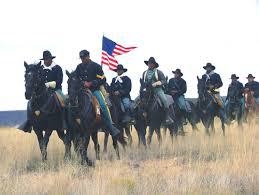 There was always the moment, in those old Westerns, when the settler families, perhaps led by John Wayne, realized that the Cavalry weren’t going to get there in time to save them from the outlaw gang which was intent on raping their women, stealing their horses, killing them, and burning to the ground everything that they had worked so hard to carve out of the wilderness. That was the moment when those peace-loving farmers and ranchers realized that it was either them or the bad guys, and that it would be a fight to the finish. And that’s where I think we are right now. There was always the moment, in those old Westerns, when the settler families, perhaps led by John Wayne, realized that the Cavalry weren’t going to get there in time to save them from the outlaw gang which was intent on raping their women, stealing their horses, killing them, and burning to the ground everything that they had worked so hard to carve out of the wilderness. That was the moment when those peace-loving farmers and ranchers realized that it was either them or the bad guys, and that it would be a fight to the finish. And that’s where I think we are right now.
There are two very different visions of America which are competing for the hearts and minds of the American people, and they may well be mutually exclusive. Without strict environmental laws and enforcement, what’s left of our water, air, wild places, etc. will be polluted beyond recovery by the wealthy landowners/corporations/industry groups which have bought so many of our elected officials. Without strict construction/product safety laws and enforcement, there will be many more people dying when poorly built buildings collapse in a storm (not to mention the cost of repairs and rebuilding with all the attendant economic and community disruption), medicines will prove unsafe (does anyone remember the thalidomide crisis?), and you will have no idea what’s in the foods you eat or how contaminated they may be.
But there’s a lot more. Without sensible immigration policies and enforcement, we won’t have the workers (their skills, energy, consumption, taxes, and social insurance payments) to drive continuing innovation and growth in our economy, keep the baddies out, and live up to our own humanitarian ideals. Without sensible gun laws and enforcement, we’ll all be afraid that anyone in our family or community, upset over who knows what, perhaps having serious anger management/mental illness/ideological issues, will shoot up their own families or go on a killing rampage at a school/church/government building/etc.
And then there are those pesky reproductive rights and their enforcement, without which most young women will not be able to hold professional/executive jobs, or even aspire to them, and still become loving mothers and wives. Without voting rights and their enforcement, and the important voting access which goes with them, people of color and poor people of any race will be far worse off than they are today — and today isn’t great. Without LGBTQ rights and their enforcement, it’s back to the closets, the bullying, and the physical assaults that were the norm just a couple of decades ago. And without the strict separation of Church and State and the modest reduction in anti-Semitism of the late 50’s/early 60’s (before which it was pretty hideous, with maximum quotas and “No Jews Welcome” signs), this Jewish girl could not have attended an Ivy League college, joined a major corporation as my first employer, or even conceived of marrying my amazing but gentile husband. I could go on, but you get the picture.
Some of these rights, with their need for enabling laws and effective government, are touched on in our founding documents, but many were not. And even those which our founders — wealthy, landed, Protestant (with one Catholic) white gentlemen of a certain age, albeit amazingly farsighted, educated, and well-intentioned — incorporated into our founding documents have depended for their equitable, humane, and intelligent implementation and adjudication on several centuries of all white male elected officials and judges. As for universal voting rights, women’s reproductive rights, environmental protections, building codes, product liability laws, and marriage equality, to name just a few of the rights and enabling laws which many now take for granted as foundational to a civilized and modern society, none of these were even imagined by our founders, and that’s entirely understandable given their historical context. But then they also couldn’t imagine a world of near instantaneous communications and access to news, or today’s global environmental interdependence. So even as we hold dear each word of our founding documents, it’s long past time to accept that they must be viewed as living documents, documents whose underlying principles may be sacred but upon which we can and must build to reflect the needs of our country in 2018 and beyond. Yup, those founding documents, no matter how literally or figuratively interpreted, are not coming to our rescue anymore than those settlers could depend on the Cavalry arriving in the nick of time.
No one gave us these additional rights and protective laws willingly. “We the people” carved them out of the wilderness of big money/corporations/industry groups/etc. doing as they pleased with our environment and safety. We carved them out of the hatred of racism/sexism/homophobia/anti-Semitism/etc., and all the other horrible bigotry (to include the imposition by law of one religion’s views, which just happened to be Christianity on the rest of us) that was the norm when I was a child. I fought my heart out for these additional rights and protective laws, along with many millions of others, and we have come a very long way since the 1950’s. But like those early settlers faced with marauding thugs, everything we’ve worked for — and for which many, many Americans have died — could go up in the smoke of Trump’s tweets and his enablers’ longing for a certain type of white guy’s gauzy memory of the 1950’s, a time when people of color and women knew their place, what was good for General Motors was agreed to be good for America, and America was the envy of the world.
So my friends (who are of every political stripe but within a standard deviation or so from the middle of that old Bell curve), it’s up to us. There’s no magical candidate going to ride in on a white horse (and wearing a white hat) to beat Trump in 2020 hands down. There’s, no hard right GOP fandango (i.e. pile of mistakes, from bringing us the Great Recession rooted in funny financial dealings to the market tanking completely at the first hint that China is going to cash in a few of their huge supply of US Treasury Bills because their pissed at Trump’s tariffs) which will overcome the GOP’s decades of effective grass roots organizing/hate mongering/big money cultivation. And, sadly, there’s no collection of Presidential tweets/policies/blathering/etc. that’s so stupid, corrupt, offensive (or all three) that will cause his base to stand up and declare themselves free of the Trumpian spell.
The Cavalry isn’t coming to our rescue, but I can no longer march or sit-in or cope with being tear gassed or arrested as I did in the 60’s. Now all of you who are younger than me — and that’s almost all of you — will have to do the same or you will lose these rights and protections for generations to come. And some of what’s happening, especially as regards the environment and our place on the global stage, may take generations to repair. We’d best get started right now to rescue America from those who are too many standard deviations from the center of the American values Bell curve. “We the people” must be our own Calvary.
 I cried myself to sleep last night, more discouraged about America than I could ever remember. We worked so hard to get to an enviable place in our pursuit of that more perfect union, to a level of human and civil rights, of social justice and the rule of law, which was the envy of the world. Seeing the smugness of Mitch McConnell as he declared a rapid confirmation for whoever Trump nominates to replace Kennedy on the Supreme Court, after denying Merrick Garland’s nomination any due process, made me physically ill.. I cried myself to sleep last night, more discouraged about America than I could ever remember. We worked so hard to get to an enviable place in our pursuit of that more perfect union, to a level of human and civil rights, of social justice and the rule of law, which was the envy of the world. Seeing the smugness of Mitch McConnell as he declared a rapid confirmation for whoever Trump nominates to replace Kennedy on the Supreme Court, after denying Merrick Garland’s nomination any due process, made me physically ill..
There’s been so much awfulness over the last couple of years that many of us are feeling the whiplash that is Trumpism. Where do you even begin to deal with the vast wave of science denial, unpunished or even acknowledged lies and corruption by holders of high office, every flavor of hate speech coming from the mouths of elected officials and their minions, Trump’s truly lewd language and behavior ignored by evangelical voters, and the growing threats of officially sanctioned or simply ignored racism, anti-Semitism, homophobia, Islamaphobia, xenophobia, gun violence and so much more. But, like so many, I truly believed that the awfulness could go only so far because the Judiciary would save us. Well, so much for that.
If we’re going to save ourselves from becoming just another tin-pot dictatorship, if we’re going to ensure that both conservative and progressive voices, voices whose disagreements are over the interpretation of facts and not about the facts themselves, can be heard above the din, if we’re going to protect the rights of everyone and preserve our secular, multi-cultural democracy, then we’d better learn a thing or two — and quickly — from the “greatest generation.” What’s happening in America is not a fight between the left and right over policy solutions to agreed problems. It’s a fight between truth and lies, between patriotism and treason, between the rule of law applied equally and the rule of law applied selectively, between a government betraying the science and/or facts behind public policy in the interests of backing up the lies of a little man whose election benefitted from decades of gerrymandering and Russian meddling in our election. It’s a fight for the very soul of the country to which my grandmother, my Bubbi Bloom of blessed memory, and so many others fled when the world around them was going up in flames, being overrun by murderous thugs, and/or being decimated by starvation.
No one has been trying to immigrate to Russian or North Korean or even China; they’ve been trying to immigrate to America — and for good reason. We have been, for most of my long life, a beacon of hope to the “huddled masses yearning to breathe free.” When my Bubbi Bloom of blessed memory told me about her first sight of our Statue of Liberty, there were always tears in her eyes, and she spoke in the Yiddish to which she reverted when English didn’t provide just the right words. To her and the thousands of other Jewish immigrants who brought so much energy and intellect to America, and but for whose courage I would not be writing this, they were risking their lives to reach “die goldene Medina.”
Yes, I cried myself to sleep last night, and I’m sure it won’t be the last time before we retake America, but I woke up this morning more determined than ever that America is worth saving. And I remembered Kent State, the assassinations of my 60’s heroes, the horrible beatings that so many endured, including some of my classmates with whom I was arrested during a protest march, the endless stream of body bags returning from Viet Nam, and so much more. Yes, things are pretty dark right now in America, but they’ve been dark before.
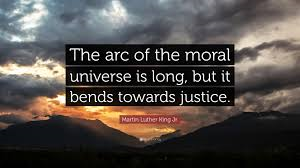
There are two phrases that I keep coming back to, phrases that keep rattling around in my brain. The first is from Dr. King: “The arc of the moral universe is long, but it bends toward justice” The second is from my Bubbi Bloom of blessed memory. I would ask her, as a child, how did you ever walk from your shtetl (in the Russian Pale) to France (where the Jewish Agency provided help in reaching America)? And she would answer in the Yiddish I can barely remember: the same way you walk to school, by putting one foot in front of the other until you get there.
We cannot be paralyzed by the disasters befalling our democracy nor by the evil walking the halls of government wearing the Trump badge of dishonor. Instead, we must be energized to support balanced, honest, candidates not yet sullied by the stink of corruption. I’m definitely from the progressive side of the political spectrum, but I lean more conservative on matters of financial management and defense and more liberal on matters of social justice and individual freedom. Your political views may be quite different from mine, but once corruption, lies, and injustice rule, no one is safe no matter how much you may agree with a current leader on any specific policy.
Nothing teaches us the dangers of being blind to the advance of evil and silent in the defense of others than the famous poem by someone who spoke out, at great peril, against the rise of Hitler, Pastor Martin Niemoller:
First they came for the Socialists, and I did not speak out—
Because I was not a Socialist.
Then they came for the Trade Unionists, and I did not speak out—
Because I was not a Trade Unionist.
Then they came for the Jews, and I did not speak out—
Because I was not a Jew.
Then they came for me—and there was no one left to speak for me.
I know I’ll cry again, and so may you. But we must keep putting one foot in front of the other — running for office, working for the candidates we support, registering to vote and helping others to register, voting and helping others to vote, volunteering to monitor the vote, doing everything possible to elect leaders who will be answerable to we the people rather than to the tin-pot dictator of the moment — until we see a glimmer of light on the other side of this horrible, horrible chapter in American history.
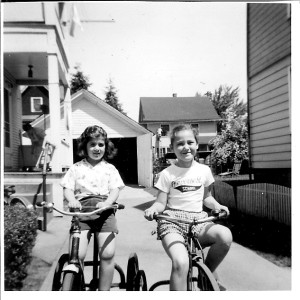 Naomi & Cousin Ronni Circa 1950 Yes, I’m retired, but that doesn’t mean that I’ve stopped learning — or attending conferences. Whether it’s the annual Florida Watercolor Society convention, and Urban Sketchers event, Emily’s List conference, or the Agatha Christie International Festival, much of what I learned about making the most of my time at the HR technology conferences of my pre-retirement life still applies. Actually, some of those conference tips apply even more so as my stamina falls victim to aging such that I have to maximize the value received for time invested. So, no matter the focus of the event, here are some tips for attending both your larger personal and professional gatherings. And if you happen to be attending one of my new favorites, by all means say hello, even if we just wave at each other as I ride around on my electric scooter.
If you’re anything like me, from the time you arrive in a conference city, you’re off and running, non-stop, on:
- vendor/industry/colleague/old friends meetings — just getting all of these scheduled is a big part of my preparations for conferences, and of course this becomes much more difficult when you’re operating across cultures/languages/etc.;
- exhibition hall booth visiting — I make a valiant effort to stroll past every booth, but of course that’s not practical if you’re at a major trade show so, at a minimum, make sure to visit all the booths aimed at your particular interests;
- session attending and delivery — and yes, I expect to continue speaking if and when I ever have anything useful to contribute on the subject of non-profit donor development, illustrated journaling, or Golden Age mysteries;
- intense but wonderful hallway and restroom exchanges (do guys do as much substantive chatting and networking in their restrooms as we ladies do?);
- time with valued colleagues and long-standing friends;
- an occasional meal and more than an occasional drink;
- tweetups and meetups; and
- let’s not forget exploring the conference city, especially when it’s a great tourist locale.
So that you get the best possible return on your time and money invested in a conference, I thought you might enjoy a few “get your money’s worth” tips from my personal list.
Tip #10: Get dates for 2019 and 2020 conferences of interest on your calendar and in your budget right now. For example, the Agatha Christie International Festival operates every other September in Torquay, Devon, England. Those dates in 2019 have just been posted, so I’ll be looking for any Golden Age mystery-related conferences in England at about the same time. Especially for international conferences, given the cost of business class flights, even when flying on miles/points, and given two of us traveling together since my wonky legs do a lot better with Ron’s help, I try to combine such conference adventures whenever I can.
#Tip #9: Talk, talk, talk and listen, listen, listen because sharing questions, ideas and experiences with colleagues is the point. Bring your list of the folks you follow most on Twitter or Facebook and make it a point to meet them. Introduce yourself to total strangers (as long as they don’t look too scary), and use something from the program as a conversational opener. And I would definitely get your foreign language skills in gear — a must if you’re attending an international event or hoping to become a global citizen. It’s so empowering to help visitors from abroad find their way around a US-based event and conference city and/or to help yourself navigate an international conference and its locale.
#Tip #8: Bring a swag carrier if you’re flying in and plan to carry your giant stuffed toy home in your lap. Ron can’t imagine coming home from a conference without a new fuzzy friend, but our focus now is on swag we can use, so art supplies at art-related events, travel tools (LOVE those clever plug sets that look like various animals when you get them, all tidy and with everything plug fitting together, but which never go back together again once you pull out one of the plugs to use it), author-signed mysteries, and boating stuff (you can never have enough floaties, those foamy things which you use to keep keys, glasses, and other small objects from sinking when they fly overboard). And if you’re a vendor doing some swag planning, we also love: umbrellas (the rainy season is on right now in south Florida, and you can never have too many), interesting stress reduction toys, cuddly creatures (why doesn’t anyone ever give away big stuffed alligators), shoe bags (those soft ones in which you pack your shoes when traveling), towels (all sizes appreciated), t-shirts (medium for Ron, 1X for me — embarrassing but true), international electrical plug sets (yes, I’m repeating this for emphasis), great bottles of wine, but please no more tablet/phone covers (although popsockets are welcome), mouse accessories or weird candy.
#Tip #7: Leave room in your schedule for serendipity and for nature breaks — well at least nature breaks. I’ve met some amazing women during those nature breaks; I can’t speak for what goes on in the men’s room. Given the sometimes impossible lines at the lady’s rooms at US convention venues, I think the French idea of shared restrooms — common sink area and a collection of stalls into which you slip as they become available — has real merit. Why should women be waiting on line while stalls in a separate men’s room are free? And sharing the sinks would also provide opportunities for mixed gender ad hoc discussions of conference-related topics — or not.
#Tip #6: Pace yourself when it comes to attending sessions, no matter how wonderful the program is. And if it’s an art-related conference where you’re actually creating in those sessions, you’re going to need recovery time to let those creative juices rest. Come prepared to be an active listener, to take notes, to provide a twitterstream for your colleagues who couldn’t attend in person, and to boo any speaker who dares to give you a sales pitch or to trash their competitors. And the best thing we can do to support the hard-working folks who program these conferences and all the volunteers working hard to deliver all of those hosted by non-profit organizations, is to complete those evaluation forms, adding comments as appropriate.
#Tip #5: Don’t try to attend more than three drinks parties after a long day of sessions. I hate missing all those great parties, but my party all night and conference all day years are behind me — and behind many to most of you as well, although some of you aren’t ready to admit it. Save at least a few brain cells for the next day of sessions; you’ll thank me if you do. And for those of you attending conferences in the great wine regions of the world, or those who can afford to drink great wines wherever you are, I’ve learned my lesson about indulging in too much of those wines during the day.
#Tip #4A: Download the conference’s app and learn how to use it. Increasingly, this is the only way to know what’s going on, and the best of these apps support your networking goals, plug you into the best parties, offer suggestions on what sessions may be of greatest interest, etc. I like to support my aging memory with an overall itinerary for myself that includes my travel plans, all meetings with agenda, attendee information and logistics, location of the exhibitors I most want to visit, location of the sessions I most want to attend, details on relevant parties, and more. And while I carry this electronically, I also carry — yes, I really do — a hard copy. No dead phone battery, small screen/tired eyes combo, or last minute change is going to catch me unprepared. But of course, you probably don’t need such backup.
#Tip #4: Plan your conference in advance. With what vendors do you want to schedule extended and/or private discussions? Make those appointments now. What attendees do you want to meet? Do that outreach and arrange those meetings now. Pick your sessions and, because there are too many good ones for just one person, find a buddy with whom you can divide and conquer. Better yet, bring a whole group of fellow travelers to these conferences and cover the ground.
#Tip #3: Carry a water bottle and refill it at every chance you get. Convention center/conference venue climates are designed to dessicate, and they don’t always have enough refreshment stations. Lately I’ve been carrying a protein bar or two in my purse, something you may also want to consider. And I could also suggest that you bring a restorative flask, but you didn’t read that here.
#Tip #2A: Assume that the convention center will be too cold/too hot/too drafty/too whatever, and dress accordingly. Unless it’s the subject of the conference, you may want to lose the flipflops, cutoffs, and anything that reveals parts of you that I’d rather not see. Here I’m showing my personal biases, but even casual does not translate in my book into anything lower down the sartorial scale than clean pressed jeans or shorts, a similarly clean ironed t-shirt with at least short sleeves, most of your tattoos tactfully covered, and shoes. And folks in clown suits may be expected to entertain the other attendees.
#Tip #2: Wear your most comfortable walking shoes. There may be few places to sit except in sessions, and there can be long distances to cover at larger venues. Yes, I know that my younger female friends may want to show off those Manolo D’orsay spikes — the latest in fashionista circles — and I don’t blame you, but be sure you’ve got a suitably designed male colleague at the ready to carry you after the first hour. Having done my fair share of spike heel time, I’m convinced that there’s a causative connection to my now arthritic joints. It doesn’t matter what shoes I’ll be wearing as I flash by on my magic carpet (electric scooter), but you’ll be limping by noon if you don’t select your shoes carefully. And speaking of that magic carpet, we finally found, in an English antique shop, a suitable horn so that I can give fair warning before running over fellow conference goers.
#Tip #1: Like every artist, from rank beginner on up, that I’ve met in various classes or online groups, I’m becoming an art supply junky. I’m focused on illustrated journaling, and I’ve already learned that there’s a VERY large number of possible watercolor colors, watercolor pencil, watercolor sticks, and watercolor markers. Then there are zillions of waterproof drawing pens, watercolor paper journals, palettes (both studio and en plein aire) — are you getting the point? So, rather than buying everything in sight (and this also applies to every book at a mystery book event or every boating tchotchke at a boat show, etc.), it’s not a bad idea to do a little inventory before you go, perhaps even automating that inventory and carrying it on your phone. But since no one is going to do that, including me, Just bring an extra suitcase for your purchases.
Most important: whichever conferences you attend, be sure to say thank you to the conference organizers. They work their butts of all year to give you the best possible experience, and they deserve our gratitude. See you soon….
 Remembering Joey Shapiro Anthony Bourdain’s suicide and all the related tributes, personal introspections, lamentations and analysis have really upset me, and not because I feel his loss personally. Not being a foodie, I didn’t even know who he was until I caught a piece of one of his shows because I saw it mentioned as including Barack Obama. But the manner of his death, by his own hand, coming as such a total shock to people, the unexpected suicide of someone so full of life whose private demons weren’t even that private, has shaken me — and many others if I can judge by a recent private discussion thread of which I’m a member. But what has really shaken me is the memory of the first suicide I experienced, more than a half century ago, of a much loved friend, Joey Shapiro.
I fell in young love with Joey at first sight at a Jewish youth group gathering in my early teens. He wasn’t just gorgeous on the outside — and I mean absolutely gorgeous — but he was also gorgeous on the inside. He was very kind to the geeky, not particularly ornamental girl I was (and remain) at a time when being geeky and non-ornamental were the kiss of death for ever being kissed. I had always had lots of guy friends, and I never missed a social event for lack of a date, but there just wasn’t anything about me then which aroused the ardor of young men. And although I’d long since accepted the fact that I would star as a student rather than as a social butterfly, it still hurt that the yardstick against which girls were being measured was one against which I could never measure up. And then Joey came into my life, and for the first time ever I experienced something more than friendship from a boy my own age.
All through high school, even as I dated other young men and gradually gained confidence in my social graces, Joey was never far from my thoughts. But he lived in another town, more than a half hour’s drive from my home at a time when few of us had cars or were allowed to borrow our parent’s car for so long a journey. So I only saw him at occasional Jewish youth group gatherings or when one of the girls I had met in the same way invited me to a sleepover weekend much closer to where he lived. We kept in touch via occasional letters and cards over which I’m sure he labored as much as I did to strike just the right tone. And we had even less frequent phone calls because a long distance call was a MAJOR expense reserved for only the most important communications. We never spoke of the other people we were dating or even much about our day-to-day lives but focused instead on how we were feeling and on our dreams for the future
Joey was going to be a doctor, and I was going to be a nuclear physicist. Neither one of us had any idea of the challenges we would face to realize those dreams. Joey wasn’t as gifted a student as I was, but I had never thought about that since, living so far apart, my all As and his mostly Bs along with our widely divergent SAT scores, never entered our conversation. I loved looking at him, talking with him, feeling special because of his attention, and I learned that he loved my snappy patter and admired my very different ambitions from most of the girls we knew. I didn’t realize until we began applying to and getting admissions decisions from colleges that he would not be going to an obvious feeder college for medical school, and I had no idea of just how difficult it was to become a doctor, let alone a nuclear physicist.
By the time we entered college, I was imprinted romantically on someone else, but Joey still held a special place in my heart, and we continued to keep in touch in small and infrequent but very important to me doses. His field reports were always upbeat even as mine were increasingly self aware about the fact that I lacked the spark of genius which is needed to become more than a garden variety physicist, about the realities of working my way through Penn, and about my struggles to re-imagine my future. There were no social media to enable easy, quick, cost free interactions; every exchange took time to write a note, stamp and mail it and then a lot more time to reach its destination and even more time before you could expect a response, by which time the moment had so moved on that you didn’t even remember what you had written in the first place. Needless to say, neither of us had the money for many now much longer distance phone calls.
Once I got to Penn, I rarely went home except for very short vacations. I often stayed at Penn in the summer, e.g. after my freshman year I worked at the post office on the night shift, took some classes and ran my typing service. If truth be told, going home to the problems I had left behind wasn’t an attractive option, and I really needed to make as much money as possible each summer to pay my expenses for the next year. I don’t remember how Joey spent his summers; our communications had become fewer and further between as my life, especially my romantic life, had become more complicated. But one note I received should have given me pause, should have alerted me that something was very wrong, but it didn’t. Everyone’s surprise at Anthony Bourdain’s suicide mirrors my own disbelief over Joey’s suicide — and it shouldn’t have because I shouldn’t have been surprised.
Joey’s ended his life one college break summer, and I never saw it coming. Yes, I knew from my own experiences in organic chemistry, that pacing course whose grade had to be tops for med school entry, that he would have struggled with it. And that last note I received, in which he let slip a little of the charismatic, always upbeat public persona, might have warned someone more in touch with him day-to-day. But that so young, so unfinished Naomi really didn’t see it coming, let alone the means he would choose to end his life.
Suicide is not only a terrible tragedy, but it is also a terrible sin in the orthodox Judaism of my youth. I begged my parents to let me attend his funeral, but of course they wouldn’t hear of it, and neither would they attend on my behalf. They did pay a condolence call to Joey’s grieving parents, whom they and I had never met, parents so destroyed by the manner of his death that they returned my own letter of condolence. I thought then that I should have known, that there should have been something I could do to prevent this tragedy, that I had become so absorbed in the challenges of my own life after my dream of becoming a nuclear physicist hit the hard reality of my limited intellect, that I had violated the most important principle of friendship — being there.
It’s been a very long time since Joey Shapiro took his life, and I would never have written this while his parents or brother were still alive. But today is the right time to remind myself and everyone reading this post that we must be vigilant, we must be alert to the challenges that our friends and family members are facing, we must engage with them beyond the superficial “how are you” “I’m fine” which passes for connecting now, we must be there for them. In my head I know that there’s very little I could have done to save Joey even if I had known that he might commit suicide. I wasn’t one of his closest friends nor a family member. Most important, I was too young to understand what he was going through and too resilient and full of hope myself to comprehend the lack of resilience and tendency toward despair which are present in many suicides. But in my heart, I grieve for Joey and for my failure as a friend, and it’s a grief that’s come at me full tilt in the wake of Anthony Bourdain’s suicide.
I’ve never understood people who take full credit for their accomplishments, as though getting top grades, running the fastest mile, being the most productive developer on the team, exceeding sales targets or alphabetizing by author and within genre your thousands of physical, wonderful to hold, books was a solo performance. And I’ll admit to cringing when the “pull yourself up by your bootstraps” gang, the “we don’t need any help from government” gang, and the “your health issues are your problem” gang express these views. But rather than cringing from or even screaming at all of those whose world view is radically different from my own — I’m sure you’ve noticed that screaming at people doesn’t really help — I’ve developed a simple, easily explained conceptual framework for discussing these issues, my 3-legged stool of life. The beauty of this framework, beyond giving you a place to sit, is that no one challenges the notion that a stool, to be stable, must have at least three good legs.
 Build A Life “Starter Kit” Leg #1
As it happens, we are all either blessed or cursed by the circumstances of our birth and by the good or bad fortune, the mazel, that has accompanied our journey through life. Let’s start with that first leg, the accident or circumstances of your birth. Were you born in the US rather than in North Korea? Mazel tov (literally, good luck). Born healthy, intelligent, and loved? Mazel tov. Wanted and raised by two reasonably together and prepared parents? More mazel. Born in a country whose system of laws, technology infrastructure, and overall economic development is substantial? Mazel again. Born into a country without a major epidemic underway and not engaged in a war on its own soil? The mazel is piling up. None of this is your doing. It’s just the luck of the draw, something for which you cannot take any credit. But if you’re lucky at the start, if the accident and circumstances of your birth are felicitous, you’re off to a far better start, before you’ve lifted a finger or uttered a word, than the vast majority of people being born on our beleaguered but also glorious planet.
Leg #2
Once those circumstances of your birth have provided enough mazel to get you started, it’s time to consider the second leg of our stool. Did you manage to get from your birth to today without any dread diseases, horrible accidents, loss of your freedom or life in civil unrest? Pure mazel. Did that system of laws into which you were born hold tight to this point in your life, protecting you personally, enabling your clear purchase of property, allowing your parents’ will to be probated correctly, demanding that things you had bought work as promised? Yup, just more mazel, and this time it’s brought to you by your government.
And what about picking you up when the shit hits the fan, as it does in every life. Did your healthcare system have the requisite capabilities to treat your cancer, broken leg, early onset diabetes, etc.? Did your public schools have the requisite capabilities to give you a solid foundation upon which to layer your vocational or professional education? Government mazel at work. And what about ensuring that the driver of the other car, who hit you while texting and destroyed your car, put you in hospital and out of work for six months of post-surgical rehab, has insurance and that your legitimate insurance claims are paid? It’s that legal system, healthcare system, and insurance system, working together, to get you back on your feet, perhaps even putting the bastard who hit you in jail.
Not getting nailed on your passage through life by events and factors beyond your control is mazel at work. But, obviously, getting nailed because we choose to engage in risky behaviors, neglect our health (e.g. don’t keep our vaccines up-to-date or don’t get proper check-ups) even though we have the means (money and/or health insurance and/or public health services) to access these important preventive measures, or stay with an abusive partner/spouse/boss even when we have the means (which doesn’t make it easy but does make it possible) to address the psychological issues as well as to support ourselves and our families if we leave the abusive situation — all of these personal choices cannot be blamed on a failure of mazel when they produce bad outcomes.
Leg #3
And then there’s the critical 3rd leg of our stool of life. You can take full credit for what you build on top of all that good luck through your own hard work, careful choices, and perseverance.
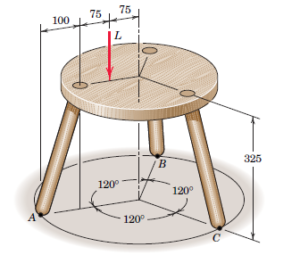 Finally, A Stool We Can Use And of course you can offset some of the bad luck you’ve had with extra effort on your part, e.g. showing the initiative to take online courses (assuming you’re lucky enough to have access to them and not to be working three jobs just to put food on the table so that you have time for them) to augment a less than stellar public school system.
I worked my butt off to pay my expenses (everything except tuition), which my family couldn’t afford to pay, so that I could attend an Ivy League college for my undergraduate degree rather than having an easier financial time (and a much more extensive social life) going to a state college. I chose to wait until I had also put myself through graduate school, working days and going to school at night, before getting married. My husband and I, both well-educated and with well-paid but very demanding careers, chose to live more modestly than many of our peers and than our income could have supported so that we could build up considerable savings. Now, in retirement, those savings are coming in mighty handy, just as they were intended to do.
Final Thoughts
But it’s important to remember just how much of what we become, of who we are, and of what we have is just plain dumb good luck. Yes, I made careful choices and worked really hard, but there’s a lot of my father’s influence (and remember, I didn’t pick my father but rather got him through the luck of the draw) in those choices because he taught me to be frugal, to work for what I wanted, and not to expect anything from anyone. Yes, my husband and I have been a good team in every aspect of our lives, but my meeting him was pure mazel. And yes, I can afford to mitigate some of my lost mobility with an expensive (but very cool www.travelscoot.com) mobility scooter which isn’t covered by insurance and the cost of which cannot be deducted as a medical expense. But if the diagnosis of these problems in my late 30’s, and their predicted development time line, had proven correct, my loss of mobility would have crippled, literally, my career during my peak earning years, and we’d be facing a very different financial future.
Thinking about life this way, as a three-legged stool (the good fortune of our birth, the good fortune of our lives, and what we ourselves accomplish through our own efforts) of which we only control one leg, makes clear why tzedakah, why the Jewish concept of philanthropy, is an obligation for those of us whose stools have three good legs. Knowing that so many such stools have two wobbly legs explains why I’m on the progressive side of the political divide. If you’re lucky enough to have a 3-legged stool supporting you, give, give, give until it hurts, vote every chance you get, and take good care of the one leg whose well-being you can control.
 It’s A Start! After several years of winding down my career gradually, I’m finally ready to pull the plug 100%. May 21, 2018 will hereafter be known as my retirement date.
I’ve had a really wonderful time, done my best to make a difference, and made some great friends along the way, but now it’s time to move on. There are so many other things I want to do with my time (to include illustrated journaling at which I’m a very enthusiastic but not talented beginner — look to your right — but which gives me great pleasure) that it’s no longer sensible to spend hours each day plugged into the ebb and flow of news and discussion at the intersection of HRM and IT, let alone to take briefings and attend vendor analyst days.
It’s also well past time for the next generation or three to take their turn at calling out the crummy software, passive aggressive corporate cultures, never going to make money business models, 40+ year old data and process designs, intransigent HR professionals, dissembling marketeers, and all the other muck that I’ve been shoveling uphill for a half century. Fortunately, those next generations include some very capable people, many of whom have become valued friends, in addition to the usual run of charlatans and wannabees.
But, before I disconnect, unfollow, unsubscribe, etc., let me reassure you that my health is fine (except for my longstanding mobility issues), Ron and I will be celebrating our 46th anniversary next month, and there’s no mid-life (later life?) crisis going on here. If you’re a personal friend as well as a valued colleague, I hope that we can stay in touch. Email’s been my friend since before many of you were born (naomibloom@mindspring.com), I made my first phone call in 1948, and there’s nothing so classy as a handwritten note on proper vellum, so these will remain the best ways to reach me until my brain implant can speak directly to yours. And I hope that all of you will keep reading my blog as I write about travel, art collecting, illustrated journaling, future novellas and plays and family stories, philanthropy, aging and much more. After all, you will be following the same path some day, if you’re really lucky, and you may benefit from the trail blazing I mean to do.
Wishing all of you fair winds and following seas.
|
|